Next page
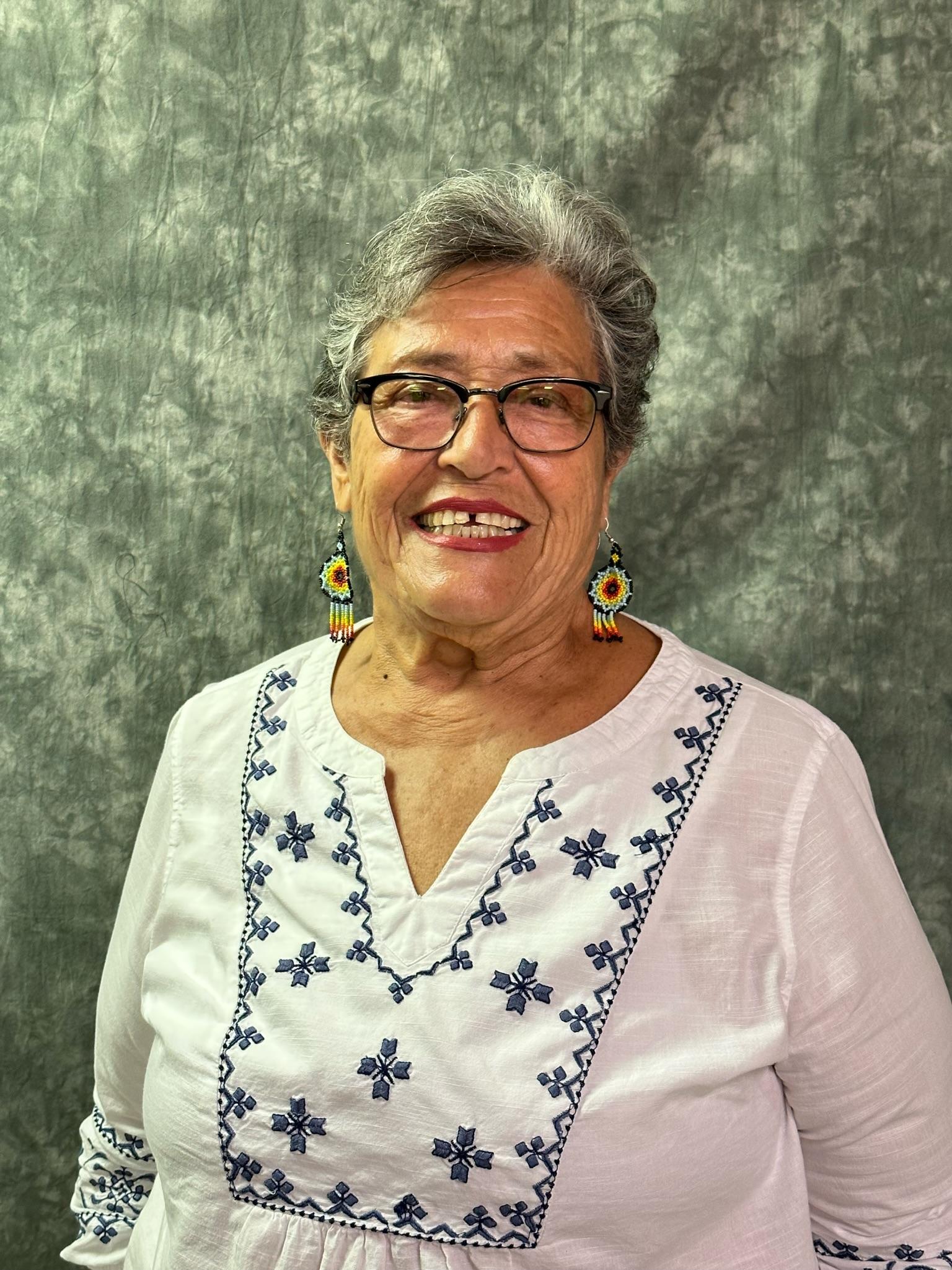
Petra Guerra
Organizations
Idaho Migrant Council, Utah Migrant Council, Vinceremos Brigade, Workers World, MEChA
Location
Mission, TX
Biography
Petra Guerra was born in Pharr, Texas, to a family of migrant farm workers. She stopped attending school in fourth grade to help her family work in the fields full time and eventually settled in Utah. There she was enlisted by Vista volunteers to leave field work for a job at a hospital and eventually found a job advocating for farm worker rights through the Utah Migrant Council. Guerra was recruited to work for the Idaho Migrant Council, where she established the Migrant Council’s statewide daycare program. Guerra briefly returned to the Valley, where she earned her GED and attended classes at Colegio Jacinto Treviño and was part of their teatro program. Guerra spent twenty years in New York City where she was involved in the Workers World Party and the Venceremos Brigade.
Audio Clips
Interviewed by Jennifer R. Nájera on March 3, 2023 in Edinburg, Texas
Guerra recounts growing up as a migrant farm worker to getting promoted to director of the Utah Migrant Council Child Development Centers.
Petra Guerra: I grew up in Pharr. We were farm workers. And I hate to use the word migrant, because migrant now means immigrant, or undocumented. But we were farm workers, migrant farm workers, and my parents built their home when I was seven. So I went to several schools here in Pharr. So at the time, I started first grade in Napper, and then went to Buell. First grade, Napper, second grade, Buell, third grade, Henry Ford, which they built for us in that colonia there. It's not a colonia anymore, but it's an area. And then Buckner. Buckner was fourth grade. So I dropped out of fourth grade. Period. And since we were farm workers, my job was to take care of the kids while my parents worked.
Jennifer Nájera: Were you the oldest?
Petra Guerra: And I'm the oldest. And it wasn't until I was 11 that actually my brother and sister took over, and I started working with my parents, full time in the fields. Of course, my dad would get paid a little bit more than Mom and I, because he was a man, but we did exactly the same amount of work. And that's the way it was everywhere. You know, when I was growing up. Then when I was 16, I got married, and I no longer was a farm worker. And then I had my two kids. Then divorced. So then I went back to the fields until I was 21. So I was married for three years, and I went back to the fields. And then when I was 21, because we used to go to Utah and Idaho, that's where we went to do our work. But those trails were something else. No dogs, dogs always came first, or Mexicans allowed. So my dad had red hair, red skin, and blue eyes. Well, almost blue. They were kind of greenish. So he could go into the... As we were driving over there, the whole crew, as we were driving over there, my dad was the only one who could go into stores as long as he didn't open his mouth, because he knew no English. So he would go in, buy everything for everybody else that was waiting outside. That continued on until the ‘70s. So when I was 21, I used to do a lot of work with the VISTA volunteers, and I don't know if you're familiar with them.
Jennifer Nájera: I've heard of them.
Petra Guerra: VISTA Volunteers was an organization that was created by the government for the rich white guys who did not want to go to Vietnam.
Jennifer Nájera: Oh.
Petra Guerra: So they had to promise to work with the poor people.
Jennifer Nájera: Oh.
Petra Guerra: And the parents would protect them or support them. So when we were in Utah, they thought, "Why don't you leave the migrant fields? Why don't you go work somewhere?" I never worked anywhere. And they convinced me to leave the farm working. They helped me find an apartment and I started working. I started working at a hospital. Jennifer Nájera: The VISTA volunteers were the ones who were trying to direct you out of the fields.
Petra Guerra: Yes, especially, this too… All the other ones were on their own. I don't know if you know Anne Klein, about Anne Klein, the designer. The clothes designer. One of her nephews was also part of that. So all that was there. And so they were from Philadelphia, but they were in Utah. So they convinced me to get a job and found me a Head Start program for my kids. And I would take my kids and drop them, and then go to work. And so I worked there. And then immediately… it was really weird, because I was not used to breaks and I was not used to all those things. And there was a lot of people that used sign language, so they would go, "Break. Break." That it was break, that I had to take a break. So I kept working there, and then I got promoted really quickly, I don't know why, to a different department. And then this other friend of the friends, she used to work for the Utah Migrant Council. And I don't know if you're familiar with the Utah Migrant Council, Idaho Migrant Council, Colorado Migrant Council, and the Texas Migrant Council. But the first one was Colorado.
Jennifer Nájera: Okay.
Petra Guerra: Okay. So anyway, so she convinced me to work as a parent coordinator for the chicano, for the migrant daycares. Now, remember, I have fourth-grade education. So, "Sure. Okay, I'll do it." By then I was kind of getting my, "I can do it." So I became the parent coordinator for the Migrant Council under her supervision. And then one day she walks in and she says, "Sister, I just got a huge grant for health. So you are now the director of the Child Development Centers." For me, that was like… Remember, fourth grade. So I said, "Okay." She said, "Don't worry, I'll supervise you." So I started writing grants.
Guerra describes her activities with teatro as a young adult and how teatro influenced her politics. She also tells a story about confronting the Utah governor about a daycare license.
Petra Guerra: And they would come, and they would teach us how to do murals and how to read poetry. Because they worked together, the Royal Chicano Air Force and Teatro Campesino. So that was my thing. That was my thing. Teatro was my thing.
Jennifer Nájera: So I heard that they would go to the fields and they would recruit the farm workers to be in their actos. Is that true?
Petra Guerra: They would. But the thing is that at the beginning they would just teach us how to do it. So they would present teatro and then some of us were getting involved in it. But it was amazing. That's what got me to decide to come to Jacinto Treviño.
Jennifer Nájera: What did you like about it?
Petra Guerra: Well, some of the things that we did in teatro, is in teatro, we would… An example. One of the roles that I played at Jacinto Treviño, was I was the mother on stage and my son was in Vietnam, out there, and he's writing me a letter, "Mamita, Blah, blah, blah. I'm killing all these people, Mamita. Children, I'm killing elderly, Mamita. I am so tired of being out here. I wish I could leave." And I was reading the letter as he's talking. Right? And then there would be a knock at the door. And somebody would come in. "This is Richard Milhouse Nixon here to inform you your son is dead."
Petra Guerra: So there was stuff like that. [Yeah, really powerful.] Other stuff would be, I don't know if you're familiar, but in El Paso you have Ysleta on one side and El Segundo on the other side, and they would fight themselves all the time, territorial wise. So this young man that graduated from Corky's program when I was at Jacinto Treviño came over and said, "I really would like for you guys to help me unite Segundo and Ysleta." And we were coming up with, "Well, we got to make up some plays that will relate to it." So one of the plays was a group of us, pachucas, “Pachucas” by then were gone,. but that was an El Paso thing. So we had our hairdos up here, and some of us had a ball in so that our hair could be a little, you know, and then somebody with their foot, one of the guys with their foot would draw a line and then somebody would step over it and then the fight would start. So that was some of the things that we did.
Jennifer Nájera: So you really appreciated kind of like the social...
Petra Guerra: Justice.
Jennifer Nájera: Justice.
Petra Guerra: Social justice.
Jennifer Nájera: And the critique.
Petra Guerra: And uniting us, uniting us all the way, no matter what we did. Other things that people still don't understand is how they would change our names. So we would pretend we were in a classroom and I would be the teacher and I would start, "Snow White. Snow White. Are you here Snow White?" And nobody would answer. Finally somebody goes, "I think she's calling you." "But my name is not Snow White." "But answer her anyway." And she goes, "My name is not Snow White. It's Blanca Nieves." And I don't know if you know Cornelio Reyna, the fantastic singer from way back. Okay, so, "Corny Queen, Corny Queen." And nobody would answer. She meant Cornelio Reyna.
Petra Guerra: And that still happens. [Yeah] How they change their names. They change their names so that… And some of us kept them. Not everybody, of course. But those were the things that teatro helped me do. And, you know, because here I have two kids, supporting myself and my two kids, and wanting to do all these things. And when I was in Utah, it's really funny because, when I was in Utah, in order for me to get the daycares licensed, I had to have certain regulations. So I would go to the licensing department, and there was an old man and he was really a cool guy. And he couldn't give me a license for one in particular. It was Pocatello. I don't know where it was. No, not, that's Idaho. It was somewhere in Utah. And I wanted to get a license because we really needed it. And you had to have three sinks, and you had to have a director, and you had to have a nurse, and you had to have teachers. And usually the elderly, instead of staying in the camps, we would hire them for the babies to take care of the babies. So I couldn't get this particular center license. So this… Also Migrant Council guy who was a Brown Beret, but he was Puerto Rican, so he should have been a Young Lord, but there was no Puerto Ricans there [Laughter]. So he was a Brown Beret, and he went with me. "Yo voy contigo carnal. Ay, vamos." So we went, and I told the secretary, "I want to talk to the governor." And she says, "Ma'am, he's busy." And I said, "Busy like hell." And I walked in and he goes, "That's okay." He told the secretary, "That's okay, let her in." I didn't know anything about this until my brother just recently told me that he thought we were going to get killed. Because we stormed into the governor's office, state capitol, and he says, "Y tu carnal no más se metio!" And I'm like, "I didn't even think about those things." You know what I mean? I never thought about those things. I just did things. And again, a lot of that stuff was from teatro, that I had learned a lot from teatro, from the Teatro Campesino. And even though I was never a member of Teatro Campesino, still I learned a lot from them.
Guerra recalls her nontraditional educational trajectory, joining the Workers of the World Party while in Austin, Texas, and moving to New York.
Jennifer Nájera: Of political consciousness. So you last leave us, you're leaving Colegio Jacinto Treviño, and you are going to...
Petra Guerra: Back to…
Jennifer Nájera: Back to Idaho.
Petra Guerra: Back to Idaho.
Jennifer Nájera: Okay.
Petra Guerra: Yeah. And when I got back to Idaho, I realized that I needed to get education. Because when I was here, the secretary asked me, because I used to do work-study, and the secretary was from, I think it's La Feria.
Jennifer Nájera: Really?
Petra Guerra: She was our secretary. She was very young woman.
Jennifer Nájera: Como se llama?
Petra Guerra: I can't remember. I wish I could remember everybody's names. But anyway, she says, "Petra, I don't have your high school diploma. I need a copy of it." I said, "Well, I don't have one." And she goes, "Well, I'll use your GED." And I said, "What's a GED?" This is in '74. Okay. So '74. No, it was at the end of '73. Almost '74. And I said, "I don't have one." And she goes, "Well, you can go to San Benito and go get a GED." And I said, "Okay." So she told me how to get there because I'm, the Valley for me was, I was totally lost because I lived twenty-some years in New York. I lived all over except here, not that much here. I mean, I lived here because of my parents, but I was not, I didn't have that freedom. So she told me where to go. And I went, and the woman says, "Okay, here's a pencil. Fill this out. When you finish, let me know." "I'm done. Give me another one." Then she goes, "Okay, you'll get it in the mail."
Jennifer Nájera: You just walked in, just took the test, and got your GED.
Petra Guerra: I had no idea I was taking a GED. So I go back to the office the next day and the secretary goes, "So when do you start your classes." I thought, "This is weird. I'm in classes. What are you talking about?" She says, "No, the GED classes." And I go, "No, she didn't tell me anything about classes." "Just what do you mean? You have to take classes in order to pass the GED?" I said, "She said, I will get it in two weeks." She says, "Oh, something went wrong. Never mind." Two weeks later, I get my GED in the mail. But I had no idea I was taking the tests. I never had history. I never had geography. I never had math, only to fourth grade. So when I got back to Nampa, I decided, I'm going to go to school. So I started Boise State. But that was not the only places that I had credit from. Because remember that viejito I told you that helped me with the licensing? He would take me to these meetings, I thought they were meetings. But it was classes… At the University of Utah.
Jennifer Nájera: Oh, wow.
Petra Guerra: But I never knew… How he got me there, how he paid? I have no idea. So I had classes there. And then when I was working for the Utah Migrant Council, every time we would go to Denver, we take all these trainings and stuff and they were actually classes. So I had all these classes when I went to Boise State, they started looking at my record and stuff and they said, "Oh, okay, yeah, you're okay." But for me that was like something totally new. Everybody was a brand new kid that just graduated from Head Start, and I was 24. I was 24. So, and again, I would be working at Simplot, the potato factory, going to school full time, and taking care of my kids. So what I would do is I would work from midnight to eight at the potato plant, go home, get my kids ready to school, take a shower, and change, and go all the way to Boise State. So that's how I started my education. And then from there, of course, I decided that I needed to, I wanted to go to law school. So what I did is, everybody kept saying, "Well, go to go to UT, go to UT." So I left Idaho, loaded this little trailer with my stuff, rented my house, and I came to UT to go to school.
Jennifer Nájera: To law school.
Petra Guerra: To University of Texas, to UT. So then when I was there, I had a real hard time because it was totally, I don't know if it still is, I'm sure it is, totally directed for the oil kids, the rich kids. I'm sure it is because I've heard from other people younger than me. It's still racist. And it was geared towards them, not for us. So I decided, no. And I had already bought... By then I had already sold my other house for a big loss. I knew nothing about houses, and I bought the one in Austin. So I became a member of Workers World Party.
Jennifer Nájera: Workers of the World.
Petra Guerra: Okay. It's very. It's communism.
Jennifer Nájera: Yeah.
Petra Guerra: Totally. You have the Communist Party, SWP, and Workers World. So I became a member of Workers World, and I started doing all kinds of events in Austin… And president elections, and all kinds of stuff. And then, of course, I worked a lot with the Brown Berets and started being really active. And I went for a conference in New York and I got hooked. So I moved to New York.
Digital Archive
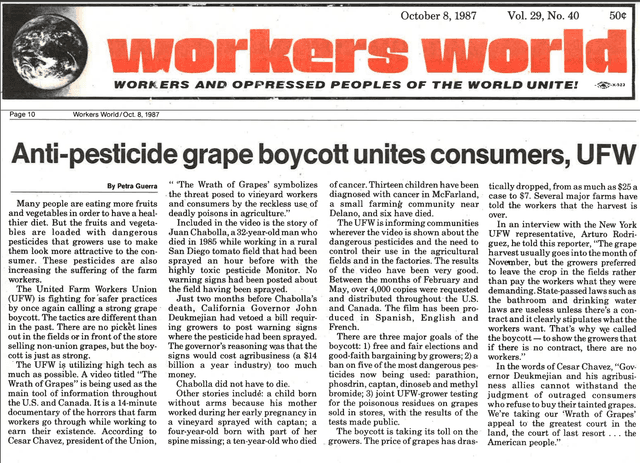
Guerra wrote about a UFW-organized grape boycott for Workers World in 1987.
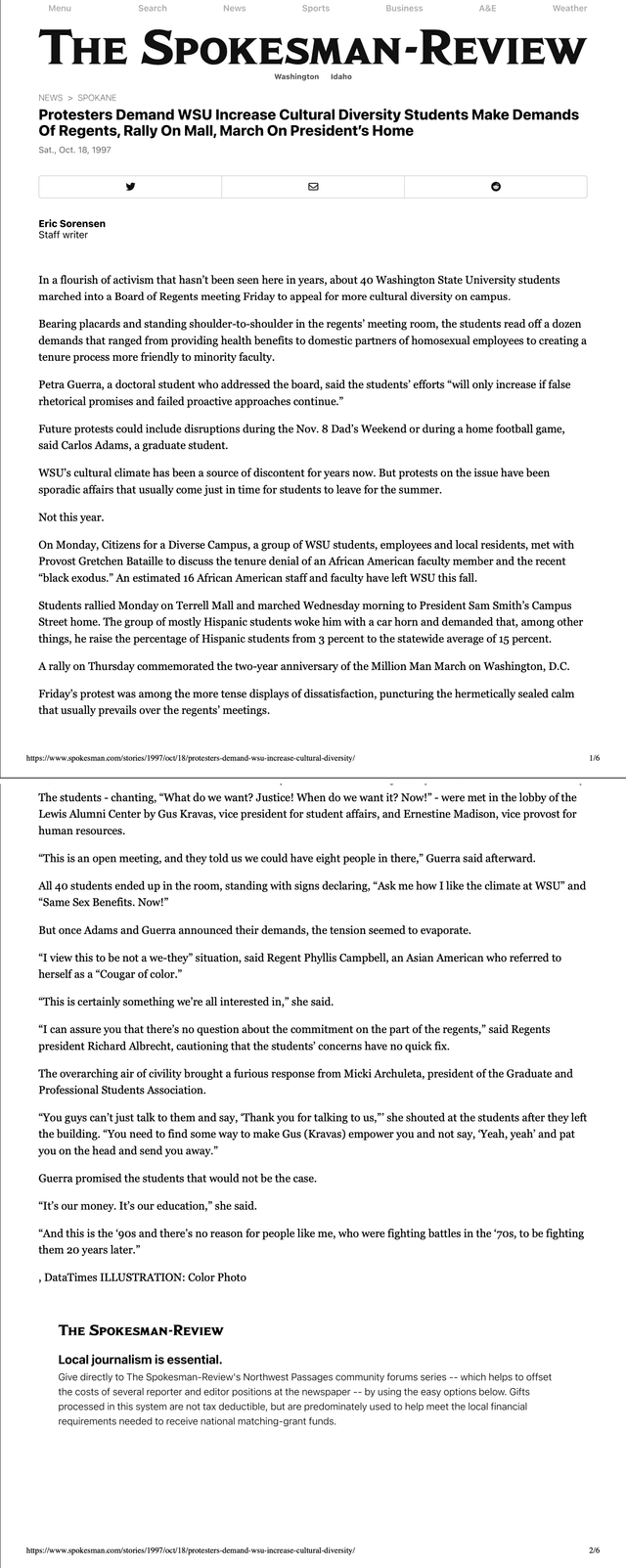
Guerra was a leader in a student protest to increase cultural diversity at Washington State University in 1997.
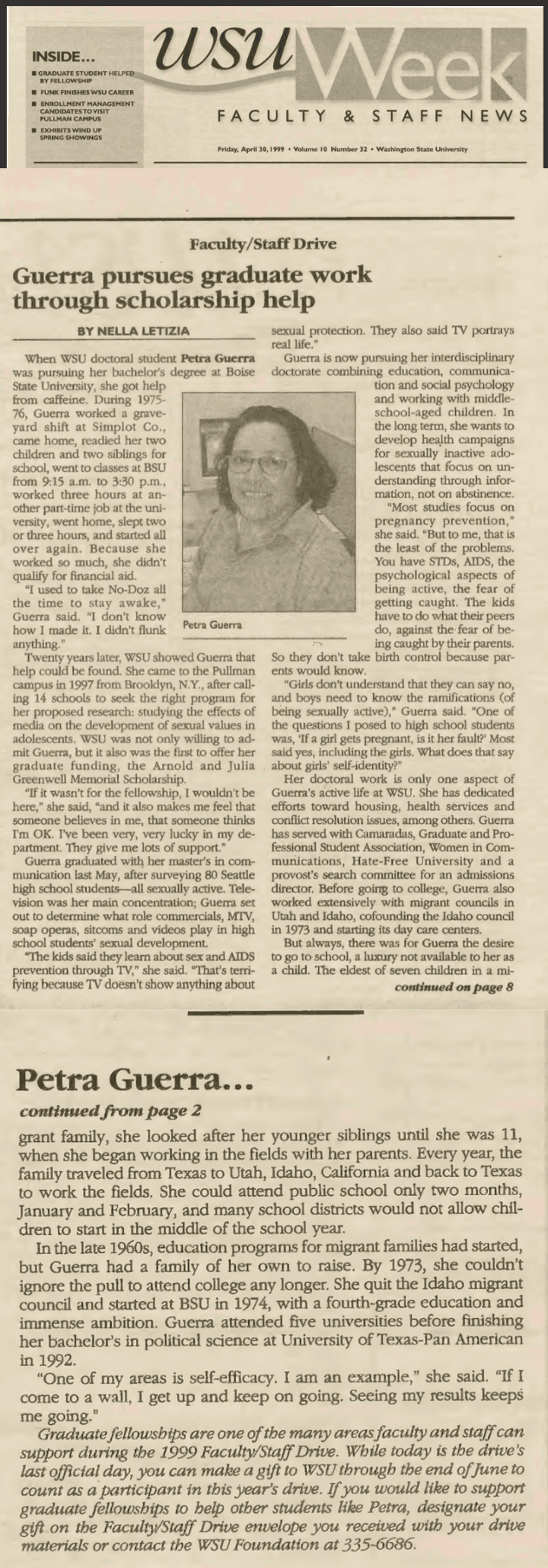
Biographical profile of Petra Guerra as a doctoral student at Washington State University in 1999.
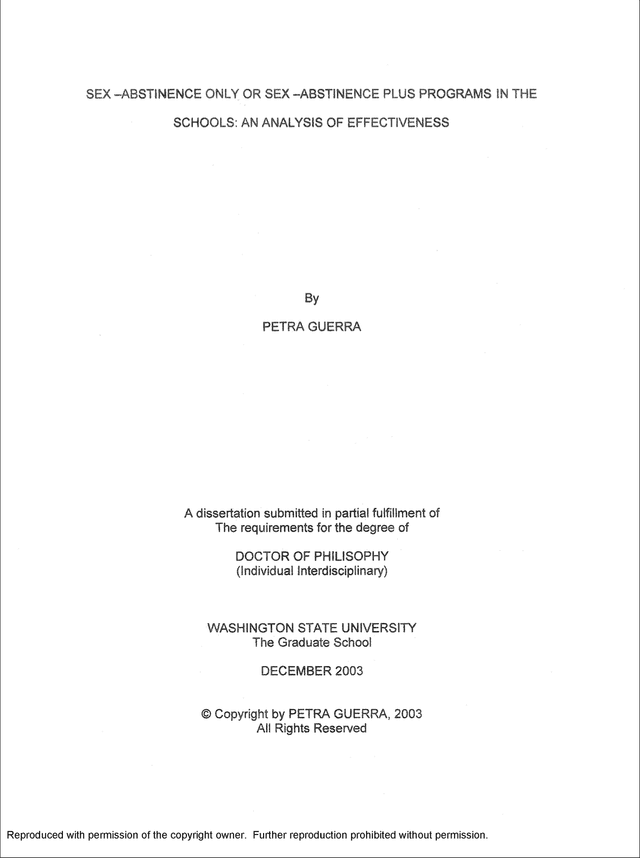
In 2003, Guerra completed her dissertation, entitled “Sex-Abstinence Only or Sex-Abstinence Plus Programs in the Schools: An Analysis of Effectiveness”.
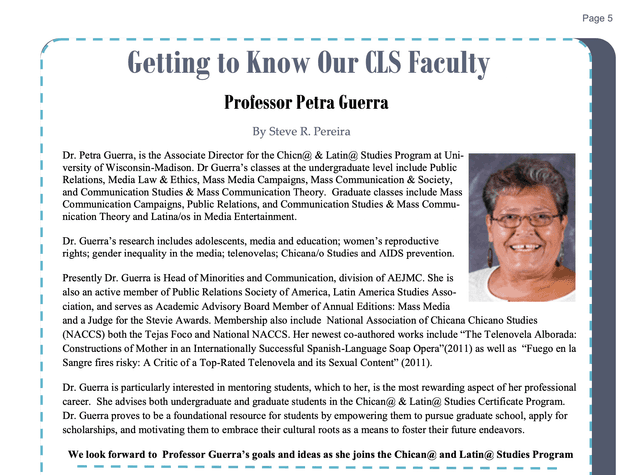
Guerra joined the faculty of the University of Wisconsin Madison in 2011 as Associate Director of Chican@ and Latin@ Studies Program.