Next page
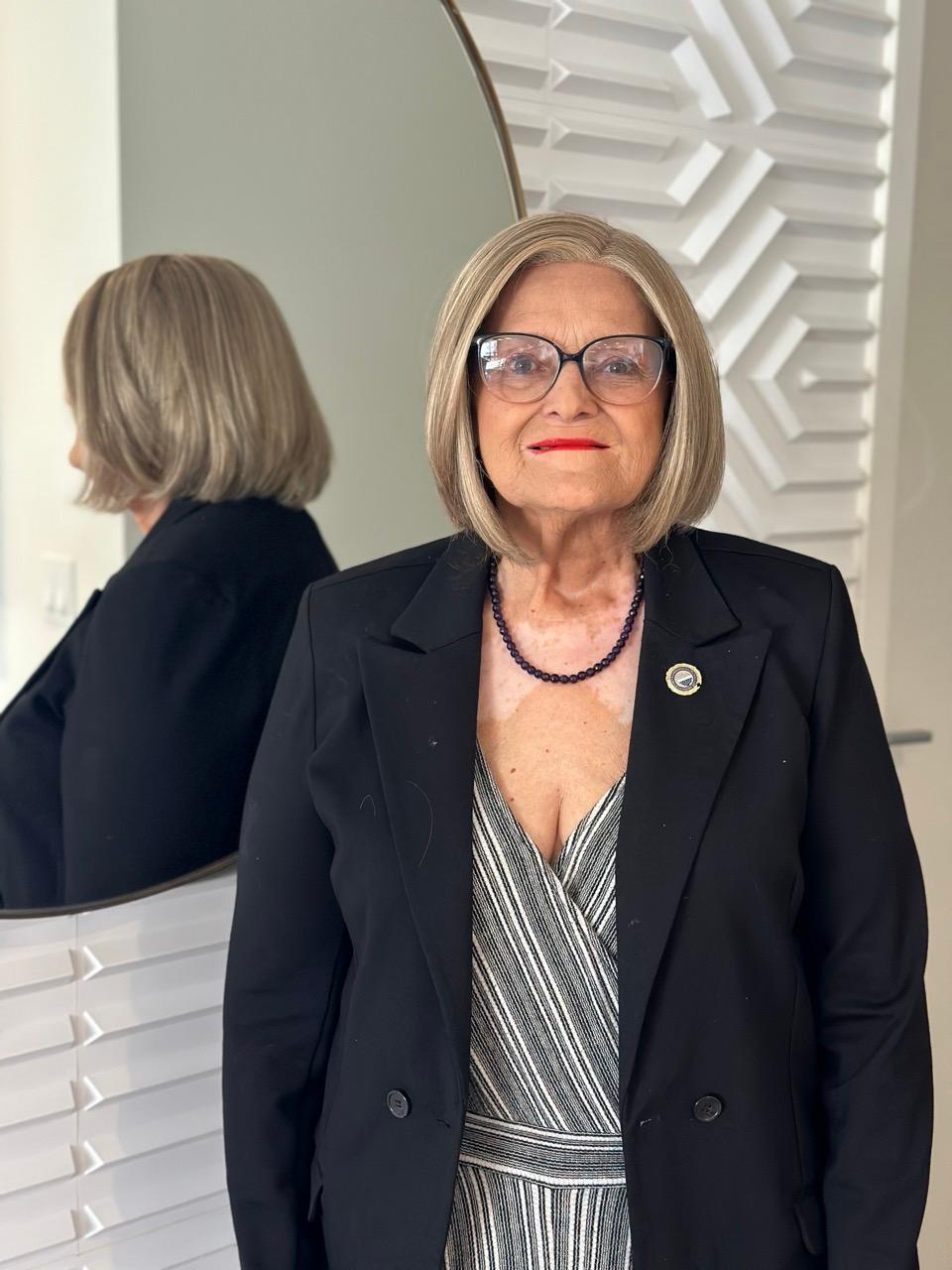
Ana Valenzuela
Organizations
LULAC
Location
Tucson, Arizona
Biography
Ana Valenzuela was born and raised in Nogales, Arizona. After graduating at the age of 16 from Our Lady of Lourdes Academy in Nogales, she took a position helping to run the pilot program for Head Start. After marrying, she moved to Tucson, where she was employed at Pima Community College. While there, Valenzuela worked her way up several offices and divisions, ultimately becoming special assistant to the college president. During her time at Pima, she became involved in the Chicano/a Movement, working with a theater group to educate the Latinx community about public health issues, particularly HIV/AIDS. Pima College was also the place where Valenzuela was introduced to the League of United Latin American Citizens (LULAC). Over the years, she rose to prominence taking on numerous leadership roles in LULAC, particularly in areas related to youth, women, education, and the elderly.
Audio Clips
Interviewed by Jennifer Nájera on May 7, 2024 in Tucson, Arizona
Valenzuela describes becoming involved with teatro during the Chicano/a movement and how that led her to collaborations using teatro for AIDS education in the Latinx community.
Jennifer Najéra: So in Pima Community College, you were you were kind of connected to some of the I mean, was that Chicano movement or.
Ana Valenzuela: Oh, yes, absolutely. Remember that, you know, theater, you know, it was a Chicano movement because we were doing Luis Valdez, you know, and militant. We were doing, you know, a lot of the, you know, a lot. A lot of these shows. And incidentally, you know, my two kids, Rick and Richard, were part of it. You know, so, you know, we were going all over the place, you know, teaching the people, you know, teaching about theater, teaching about chicanismo, teaching about, you know, about Mexican-American because, you know, we're all intermingled. You know, I mean, changing, you know, hats, you know, a way of thinking. Most of my friends, you know, we were they were raised here. You know, so so, you know, to me, we are all the same, but and with a different, you know, with a different size, you know. You know, that's the way we are, you know, and, and, uh, because, you know, you see me out there, you know, fighting, you know, for, well, not fighting, but actually defending, you know, the rights of education. You know what? You know what? They're, you know, not picketing or anything, but sitting at the table, you know, and wanting to making solutions.
Jennifer Najéra: Tell me about the, um, tell me about the AIDS, aIDS education theater that you did.
Ana Valenzuela: Okay. Well, see, during that time, you know, um, us Latinos, Mexican American Chicanos, you know, etc., we, um, we were very, um, scared. I can say scared because the ages between, um, parents, especially parents between, you know, 18 and 30, 35, they were so scared to talk to their children about the realities of life. Initially, you know, when we received that specific grant, we, you know, we were trying to do the theater, you know, the the place about, you know, one was tiempo para vivir, and it was, uh, by Edgar Puma. And he is from he was a writer from us. Well, actually, he graduated from UC Berkeley. And my friend, you know, came in Victor Perez Gomez was the director of this play, and I was the mother of, of of these men that he was gay. And he brought his, you know, his boyfriend to the house and, you know, and I was a I was an educator and my husband was a lawyer and, um, in the play and I had a, a little girl that loved my son. And, and then there was, you know, the competition, but we talked about, you know, about all, you know, about being gay, and we talked about how the mother feels, you know, that something might happen to his son. And, and that's one of the components of that particular, you know, raising funds for AIDS. Okay. When we received the, you know, when we did, you know, with the Aids component, we did it more like the vaquero style. And I do not know if you heard that song Ivan el Solitario, Albion el soltero. And it's a and it's a, you know, it's a this vaquero that comes in, you know, and tries to pick up, you know, um, somebody and then, you know, and they, you teach them about what Aids is. Then we had, you know, uh, another component, another vignette, you know, about the say no to pamphlet, the the condom, the bleach bottle and the informational pamphlet. And, and we used to do it by singing and dancing and, and and then, you know, educating the community. The grandmothers were the ones that would come and get all the information and take them to the houses. Oh, wow. Yes. And in that, you know, in that, you know, then we had the comadres. Okay. And the comadres was, I recall one that said comadre, you know, um, aqui una comadre una liga. But it was a condo. Okay. And and to train, you know, the community at large about, you know, about what we can do, how can we educate. But then be be respectful, okay. Because at one time, you know, they printed so many, so many, you know, documents. They were not tasteful. They were not respectful respecting our people. And at that time, you know, um, there were several, you know, like Doctor Eliazar Garcia, um. Well, um. Lupe? Lupe? Oh my God. The last name is Castillo.
Jennifer Najéra: Lupe Castillo?
Ana Valenzuela: Yeah, Lupe Castillo was one in the. You know, those that were looking, reading those documents? Um, I think it was Perez. Gomez. Alma and myself. You know, we were making sure that the documentation that was being sent out, you know, to the community at large that it was, you know, with a proper language there was presented.
Valenzuela talks about organizing a youth event at Pima College that led her to become involved in the education arm of LULAC.
Ana Valenzuela: Yes, the Pima Community College, um, my, my, my president, Wesley Soderquist said analysis. You know, they asked to use the, the, the college, you know, to do a conference, a youth leadership conference. Yeah. So, uh, I did not know anything about, like, to tell you the truth. And, and then, uh, I said, okay. He said, you know, the culture, you know everything. You know everything about facilities. You know how we operate. So it's going to be yours. Okay. So the first one is just a little tiny one, but then the second one, you know, when I took over, we had, you know, and it was, you know, other people, not only myself. But we we had I had a wonderful team of of friends. Okay. And, uh, what what occurred was that, uh, we got it too big. You know, we had 5000 middling high school kids coming. Oh, my gosh. Yes, yes, we had the United States Army, you know, the Golden Knights jumping the simulators. We had, uh, running, bringing their, their, um, their semi truck with all the information we had, um, the Golden Knights wanted me to jump, but I said, you know what? I'll wait for you down here. So they gave me the baton, you know, down on the floor. Uh, we had, um, we had, you know, the the the what's it the the the steel, um, heart. The what is it? Jarvik's. Okay. Yeah. You know, they brought it. They brought, you know, the hospitals because I talked to the hospitals and they decided that they were going to bring all the careers that they had, you know, in, in, in, in that they were going to need in the future. They had an operating room. They had, you know, the pregnancy where they put, you know, a vest and you walk around and you know, and you feel that we had the administration of justice, you know, we had, uh, you know, anything and you can think of governmental, you know, uh, and, and, uh, business, educational colleges and universities would come.
Jennifer Najéra: So the so the youth conference would be sort of like a massive, like, career fair. And?
Ana Valenzuela: Well, it was it was okay. It was workshops. It was a career fair expo, an expo. And also we had a keynote speaker.
Jennifer Najéra: Okay, okay.
Ana Valenzuela: In the keynote speakers, you know, we had like Patsy Torres out of Texas. We, you know, um, because, you know, she was doing a lot of things with get them to hate, you know, hate crimes. And we had Luis Valdez. Yeah. You know, you know, um, you know, stop the hate. Educate. Yes. You know, Rosita, todo bien del Corazon. You know, I, I love Luis Valdez and Lupe, you know, uh, and I can I can share that, you know, the clip and send it to you so you can see. You know what we did? Uh, I was very blessed, you know, with a lot of my friends, you know, Alma Ureta, you know, she. We worked in the same office and, um, and, and it was like 12 one, 2:00 in the morning, and we were doing 5000 bags, you know, that, you know, to give to the kids. But then, you know, the United States Army stepped in and, um, Lieutenant Colonel Charles W Hooper that now he's, uh, 2 or 3 star General Hooper. You know, he he brought his, uh, his commanding, you know, uh, battalion to help us. So, you know, we were blessed, you know, that we had somebody, you know, to help us do that. And, uh, but, you know, we work really hard. We, you know, we helped, you know, I remember, you know, Fernando Munguia, a friend of mine, uh, they worked in admissions and registration. He was one of the supervisors. And I said, you know, you want to you want to come down here and eat pizza. And then he said, sure. And he says, okay, I want you before I give you anything I said, I want you to do. I said, I want you to do control, you know, control this, control that. You know, I had everybody working, you know, and and not only I, but Alma and Fernando and and Enrique Perez Gomez and and and others, you know, that we were all work together, you know, and and it was a dream, you know, from other people that, you know, to do that conference. It was not ours. But, you know, when I was working there, that was one of my responsibilities. I matter of fact, it was part of my job description, you know, and I'm very blessed. You know, I learned a lot, um, there too, I met a lot of people while working at the college. You know, I, uh. Yeah. And when I was asked, you know, to I started, you know, I became a member. And then, um, during our first women, Belen Robles, uh, presidency, uh, they called me and she called me and asked me if I would be her secretary of education.
Digital Archive
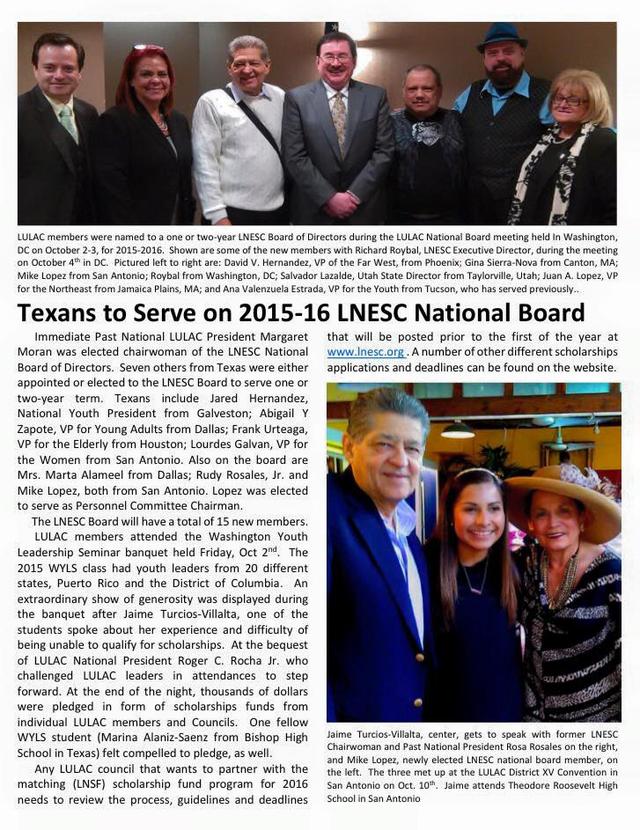
Valenzuela appointed to the Board of the LULAC National Educational Service Centers, 2015.
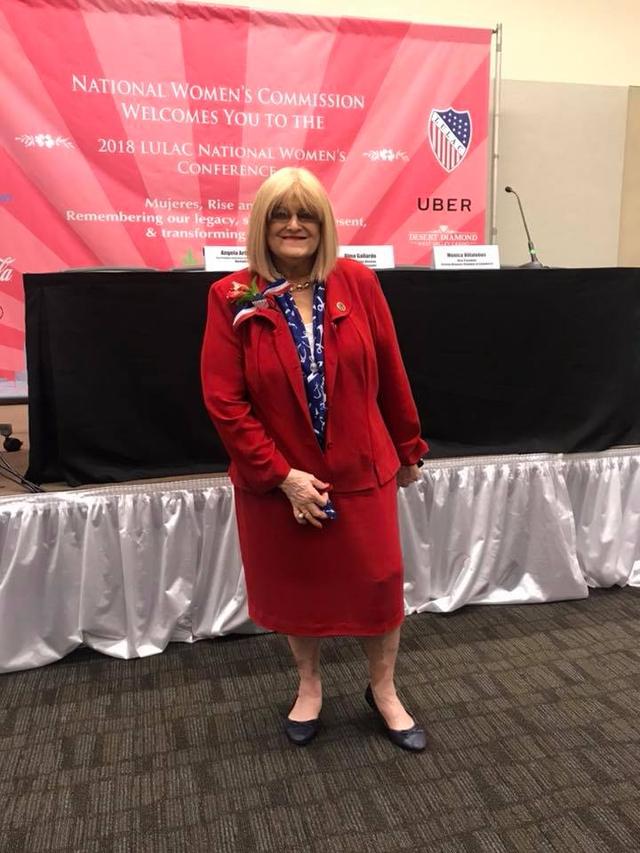
Valenzuela at the LULAC National Women’s Conference, 2018.