Consejo Municipal de Tucson, Familias Unidas Ganando Accesibilidad (FUGA)
Ubicación
Tucson, AZ
Biografía
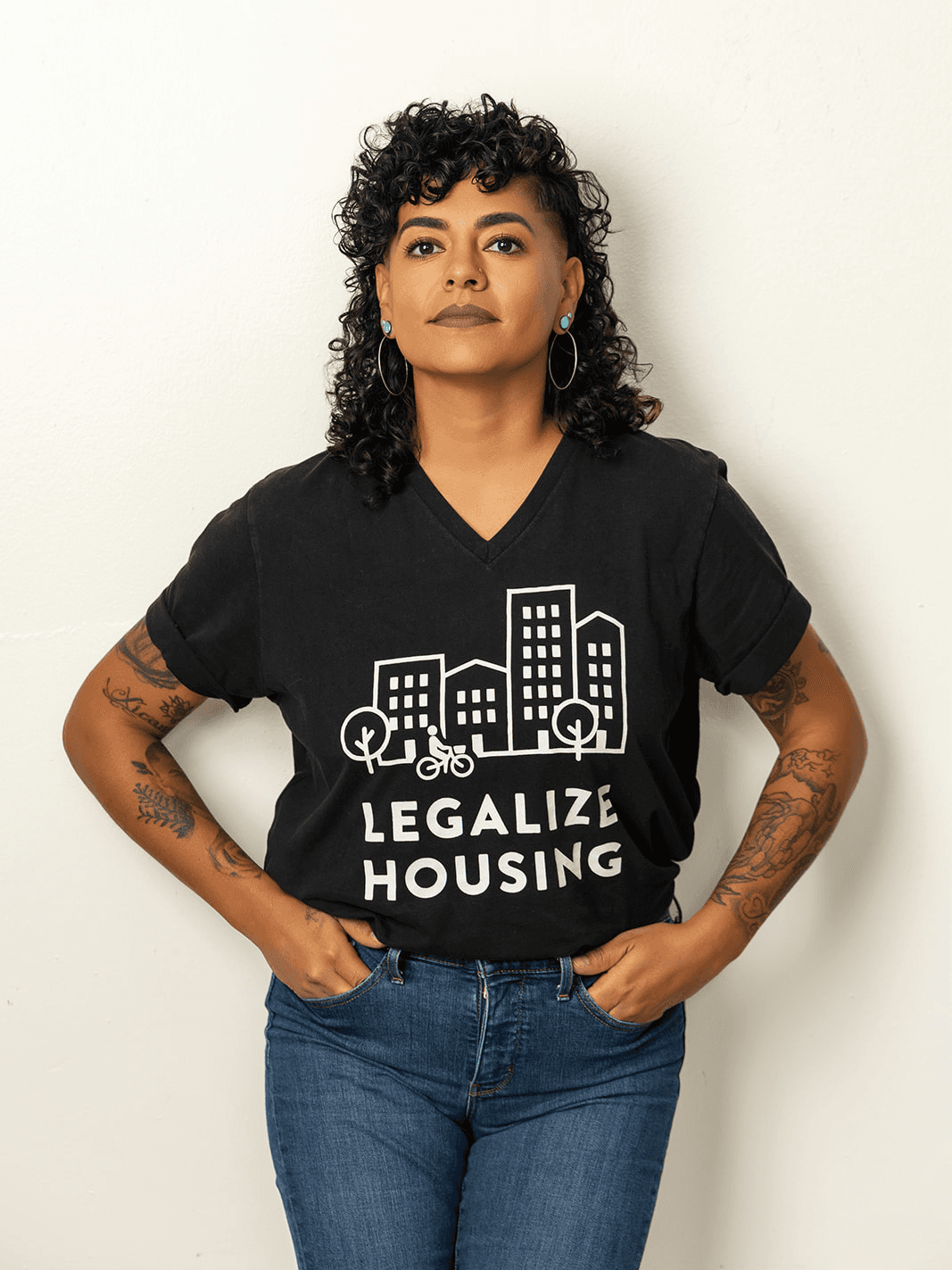
Lane Ramona Santa Cruz (elles/ella) es una tucsonense de segunda generación con antepasados indígenas de los pueblos eudeve-opata de Sonora y las comunidades tarahumaras de Chihuahua. Lane se identifica como chicanx/indígena, lo que refleja una identidad bicultural moldeada por la frontera entre Estados Unidos y México. Lane tiene un doctorado por la Universidad de Arizona, donde su investigación se centró en la descolonización de la educación. Lane fue elegida como miembro del Consejo Municipal del Distrito Uno en 2019 y reelegida en 2023; aboga por viviendas asequibles, transporte público y una gobernanza inclusiva. Una madre dedicada y organizadora comunitaria, el trabajo de Lane está profundamente arraigado en la auto-historia, la m/othering (maternidad) y la educación indígena/popular. Lane ha colaborado con organizaciones de base y movimientos para abordar las necesidades de la comunidad, construir poder colectivo y luchar por el buen vivir para todos.
Clip de audio
Entrevistada por Michelle Téllez el 31 de enero de 2024 en Tucson, AZ
Santa Cruz comenzó a participar en el gobierno local en 2007, donde se dio cuenta de que requería trabajo social y asistencia directa a los residentes.
M. Tellez: So after you graduated, the Comrades were supporting your building community. Then what happened, you know?
L. S. Cruz: Yeah. Well, there's a lot of stuff happening in the state of Arizona at the time, like the early iterations of, like SB 1070 and HB 2281. So we're constantly being called to help organize young people, or show up and support them. So that's part of what's happening. The other piece is, you know, Regina Romero runs for office. She's the first one to hold a seat in Ward One. She asked me to work for her, and then it's like entering this political scene where it's not so much outside of government, but going into government. And how do we connect the work?
M. Tellez: What year was that that you started doing?
L. S. Cruz: Two thousand eight. She got elected at the end of 2007. So it would have been in 2007. And then...
M. Tellez: So you started working here?
L. S. Cruz: Yeah.
M. Tellez: With Regina Romero?
L. S. Cruz: Mhm.
M. Tellez: Okay. And tell me about that. Like what happened? What y'all do? What'd you learn?
L. S. Cruz: You know, I mean, I thought that government is something I protested against, not a tool that you use to bring about change. And so I think it was very humbling because I had that attitude to come in and see that, like the struggles of everyday people. Folks that are just needing housing, need support with paying their water. So, as small as that to we need a crosswalk with lights so that kids can get to school safely. Too I lost my job, how can you guys help? Like working, especially at this office, is not just like city municipal services, but it's like social work that we're doing all the time. So it opened up my eyes to how important local government is and how it impacts people's everyday life. Where sometimes the federal government is so far removed, and it takes forever for things to happen, that we could, we can push things through and have real impact.
Santa Cruz comenzó a organizarse a través del ciclismo y luego se postuló para el puesto de concejal del Distrito Uno.
L. S. Cruz: Yeah, well, um, let's see, the other thing I was doing around 2016, I worked at BICAS. So I had gotten into bike commuting because, I talked earlier about walking, using public transportation. I've always, I don't know… felt like the way I cared for the environment or for myself was to move outside of using a car. And I wanted to make riding a bike more accessible to people. So I became a mechanic. And then I started doing advocacy around bike riding on the south side and the west side. And so that's how we ended up creating FUGA and doing a lot of that work.
M. Tellez: And FUGA stands for?
L. S. Cruz: Familias Unidas Ganando Accesibilidad. And we started with bike rides. And for us it was like, the bike is a tool to organize. But doing it in a way that's life-affirming, too, because again, we were going through so much shit. It's like, “How can we bring some joy, some connection? Have families come together? What we're doing is a political act, but it doesn't have to feel so overtly like a political thing that we're engaging in.” So we were doing that for a while. I was super frustrated with the city because of the way that they treated our communities. Where they just tokenize applying for grants and saying... that they're working in low-income communities, but all they're doing is kind of building up their own professional careers in the city, and nothing changes in the South Side and the West Side. So that was already kind of putting little espinitas in me of like: "I'm not okay with this." At some point, Regina is like: "I'm gonna wrap up my term." She's like: "Can you come help me wrap up my term?" And so I was pregnant with Jorge, and I was like: "God damn it." I was like [Laughs]: "Yeah, I guess I need a paycheck." And being back here just kind of reminded me of the stuff that we can do. And when she decided to run for mayor, she said, would you consider running for the seat? And I said: "Yeah. Yes, yes, I would."
M. Tellez: It's amazing. So, and how did that go for you?
L. S. Cruz: Ay ay ay [Laughs] I mean, I got elected at the end of 2019, got into office,three months later, the pandemic hits and... It was rough… It's been rough. Then just getting reelected again.
M. Tellez: I mean, it was rough, but you ran again, so there's something that kept you. So what? Tell me about that.
L. S. Cruz: Because we have so much work to do. We have so much work to do. I think we put a lot of things in motion our first time in office, and I want to see that... I want that system change. We started to really ingrain itself. And that is not just me either. I want to build up spaces that other people like us can step into them, and they can run with it. So much of what we're doing is trying to untangle all the ways that we're kept out of power in this community. So...
Santa Cruz cuenta cómo trabaja para responder a las necesidades de la comunidad y también para empoderar a los miembros de la comunidad para que se conviertan en líderes.
M. Tellez: So that's the first thing. And so then what would you hope to see people advocating for, I guess?
L. S. Cruz: Well, I mean, some of the things that we've done, because I know that even when I ran for office the first time when I was knocking on doors, folks would be like: “Are you going to be one of those politicians that we only see when they're trying to get reelected, and we never see them again?” And that was like: “Shit, people really feel... Just marginalized or just not like they're not listened to.” So in '21, we knocked on 10,000 doors in Ward One just to hear from people, like: "What's happening in your neighborhood? What do you care about? What do you want me to be focused on as your council member?" And from there, it was like the top things were like... [Talking to their son] Mande? ... Okay, papa. Okay. [Continues] It was like… They wanted the roads repaved. They're like: "Our neighborhood streets haven't been touched in decades." And then it was like safety, related to: "We want better lighting. We want safer crosswalks. We want parks for our kids."
So that's what we then got to push. One of the propositions, 411, is to repave every neighborhood street. And in that past that proposition, or that funding source, was 60% police and fire, and 40% roads. I got to fight for all of it to be roads. And then safety, related to roads, too. So it's basically meeting people where they're at. And that's what we're constantly doing here. We're organizing, even all my staff. I'm like, what we're doing here is organizing. We're not just looking pretty, you know, at City Hall or going to meetings. Some of the other things we've done are like in the spirit of popular education, we've only gotten to do it once, you know. [Talking to their son] Tiralo a la basura. [Continues] It's like academia vecinos líderes, where we're trying to skill up community members.
M. Tellez: What is it called?
L. S. Cruz: Academia vecinos líderes. So that they see themselves as leaders in their neighborhoods, and we can help them. Anything, from facilitating meetings to this is where there's funding. How do you move something, an investment that you want to see. So we're doing that. We started the Budget de la Gente, which is people getting to decide how we use city money.
M. Tellez: Mhm.
L. S. Cruz: And then we've also been doing cafecito with neighbors and barrio walks. So just trying to create different touch points that we're not just in a building.
Archivo Digital
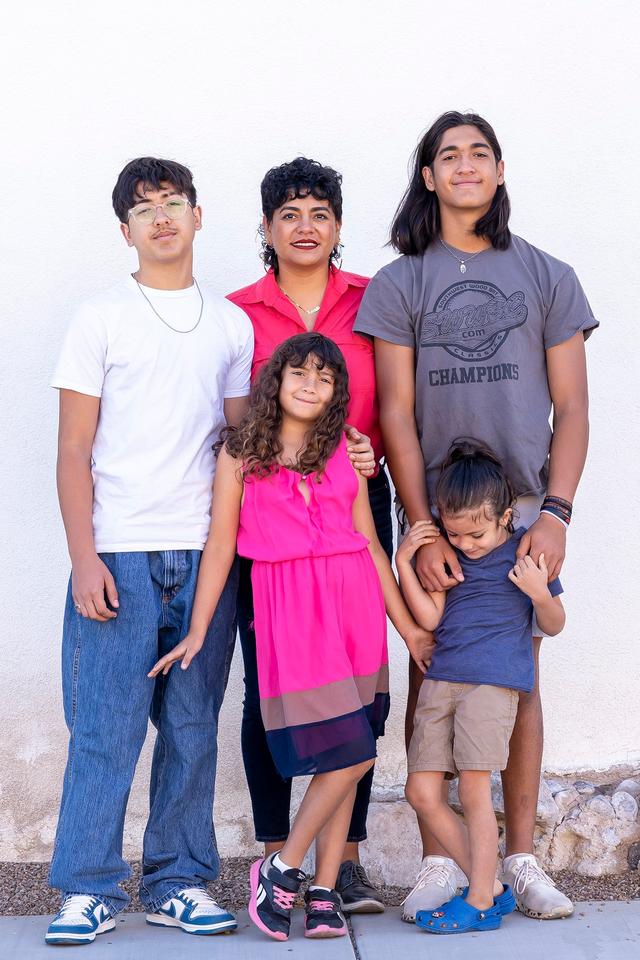
Lane Santa Cruz con sus hijos.
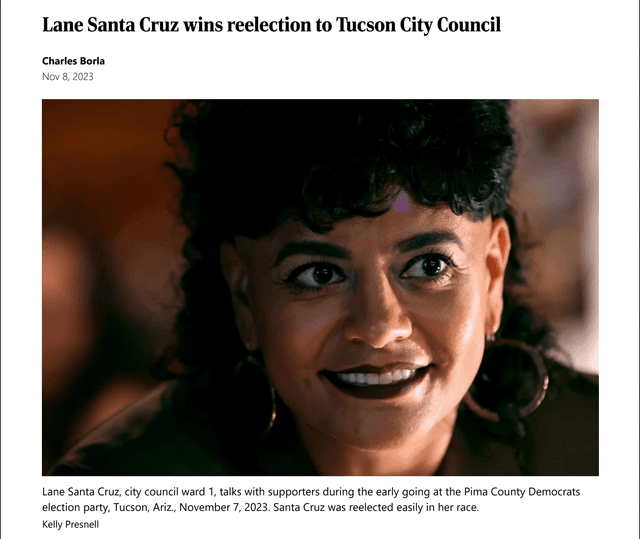
Santa Cruz fue re-elegida para representar al Distrito 1 en el Consejo Municipal de Tucson en 2023.
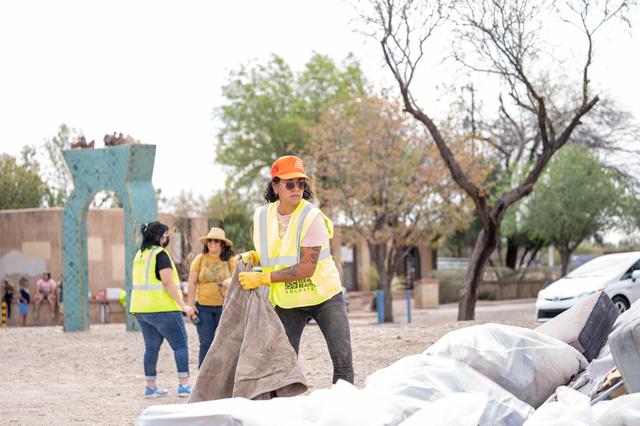
Santa Cruz participa como voluntaria en un proyecto de limpieza comunitaria en el distrito 1.
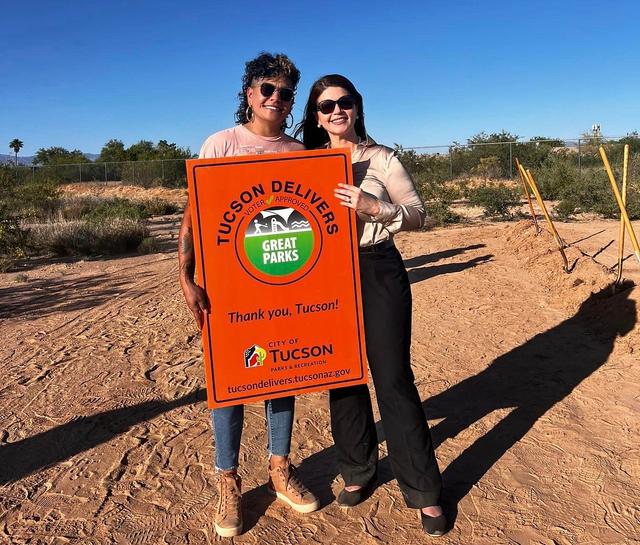
Lane Santa Cruz con la alcaldesa de Tucson, Regina Romero.
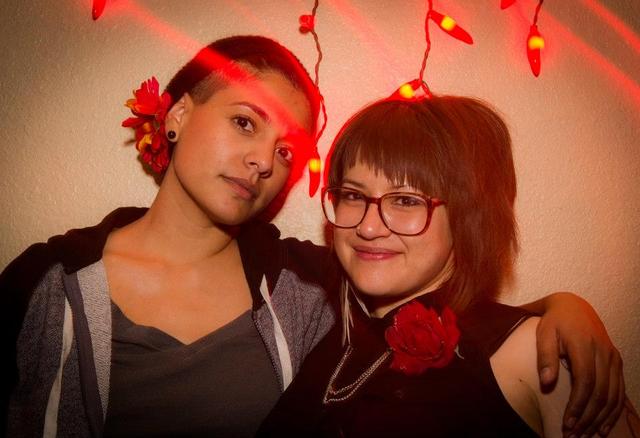
Santa Cruz en el Día Internacional de la Mujer/Semana de la Mujer en 2013, destacada en Malintzine, una comunidad de mujeres radicales comprometidas con documentar las vidas de las personas marginadas.
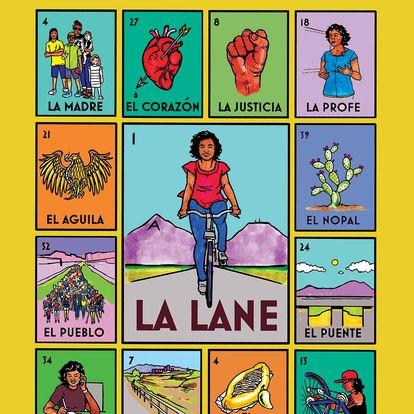
Tarjeta de publicidad estilo lotería para la campaña de Lane Santa Cruz al Consejo Municipal del Distrito 1.