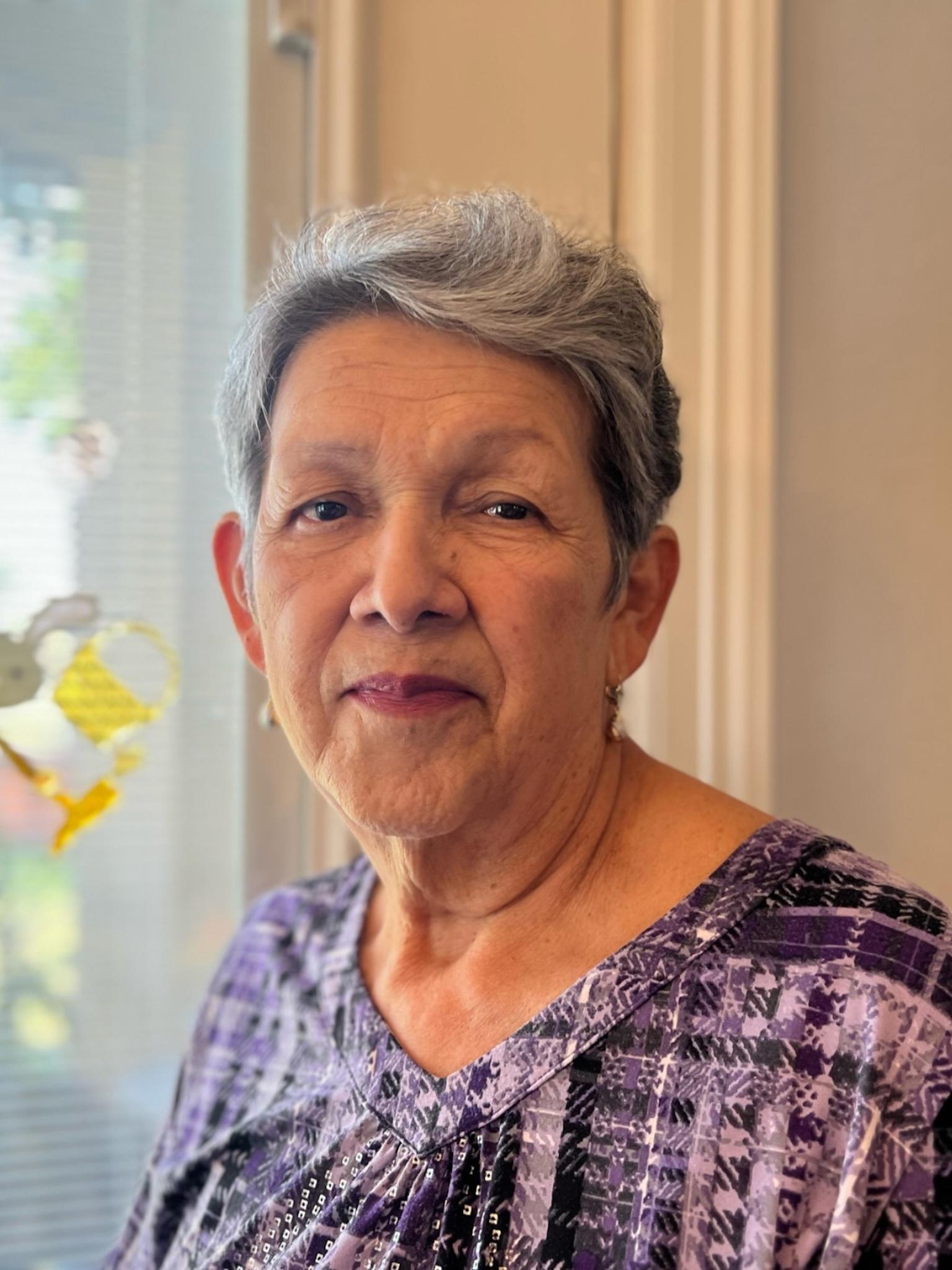
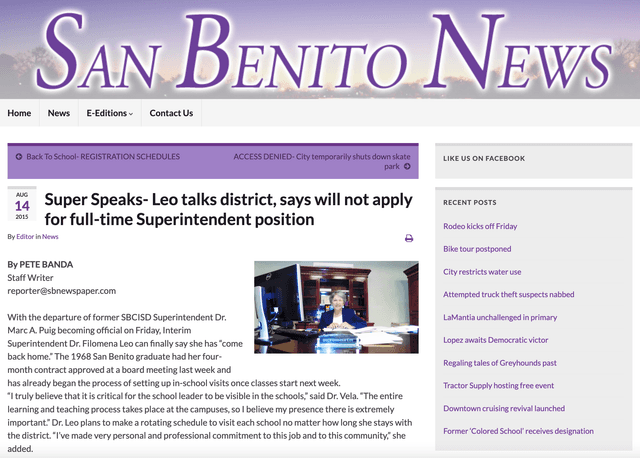
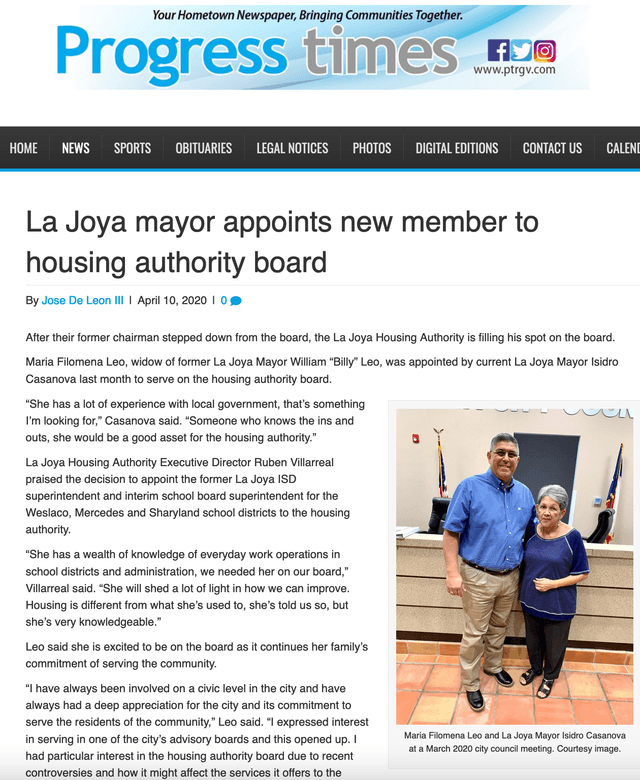
Maria Filomena Leo: So I come here to this place that is 97%, and that's a loose figure, 97% Mexican Americans and who spoke Spanish primarily their first language, and who incorporated into their daily lives a lot of the Mexican traditions, whether it was having menudo, which, uhh, I did not like, but I learned to love. Whether it was that, or whether it was the annual Cinco de Mayo celebration at the school that was so beautiful that celebrated the culture of Mexico. Going to church here, hearing the mass, and the homily said in Spanish. All of that was different. And politically on the outside, there were these personal clashes. There were camps, and you either belonged to this party or that party. And we're not talking Democrats and Republicans. And every school board, every year, the school board election was a bitter battle. And yes, my husband was very involved.
So there I was alongside him and his father going to visit voters to get them to come and vote or passing out leaflets, becoming a political activist that I had not been before. And depending on who won or lost, there was this event that would always take place. The winning side would parade in their cars around the communities that are in the La Joya district, starting in Sullivan City, way to the west, Los Ebanos an even smaller community. And the caravan would wind itself around the community and then come over to the next one and so on. So of course I rode along, and the opposition would be at their doors hurling ugly words. And I thought, "How funny." I just thought it was humorous then.
But the more that happened, the less comfortable I was with that or the name calling and the accusations and the leaflets with innuendos and false statements about our side and our side putting something together to counter that. I was very uncomfortable with that. And I remember having a number of discussions with my husband about the value of fighting back with those ugly tactics. And he said, "We have to do it. We can't allow them to, what we now recognize, we can't allow them to manage the narrative, as is the popular term now, because whoever spoke the loudest and the most often people listen to. That's human nature." And so all of this...
Fast forward 46 years later, when my husband passed away, right here, as in the Mexican custom. We prayed the novena, the nine days of rosaries. And friends and neighbors would come. And as one dear lady who is my age and who had not been involved politically, but her mother had. Her mother was one of those who would stand outside with a broom and say, "We're going to sweep you off next year. We'll get you," and wave the broom. But, so she shared with me about those caravans and she said her mother would always make them stay inside the house to protect them because she was worried that the caravan, if we happened to have won, the caravan there would be not just ugly things, objects thrown toward the house. I never saw that. But she shared with me. She said, "All of that was happening until you came." And I said, "But you're not saying I made a difference." And she said, "Yes, you did." She said, she thought, I don't know why, that she thought I had anything to do with calming things down. That I would not hesitate to try to influence my husband, to change the culture, or my father-in-law until he passed away. But the three of us would have conversations about what was going on politically.