Next page
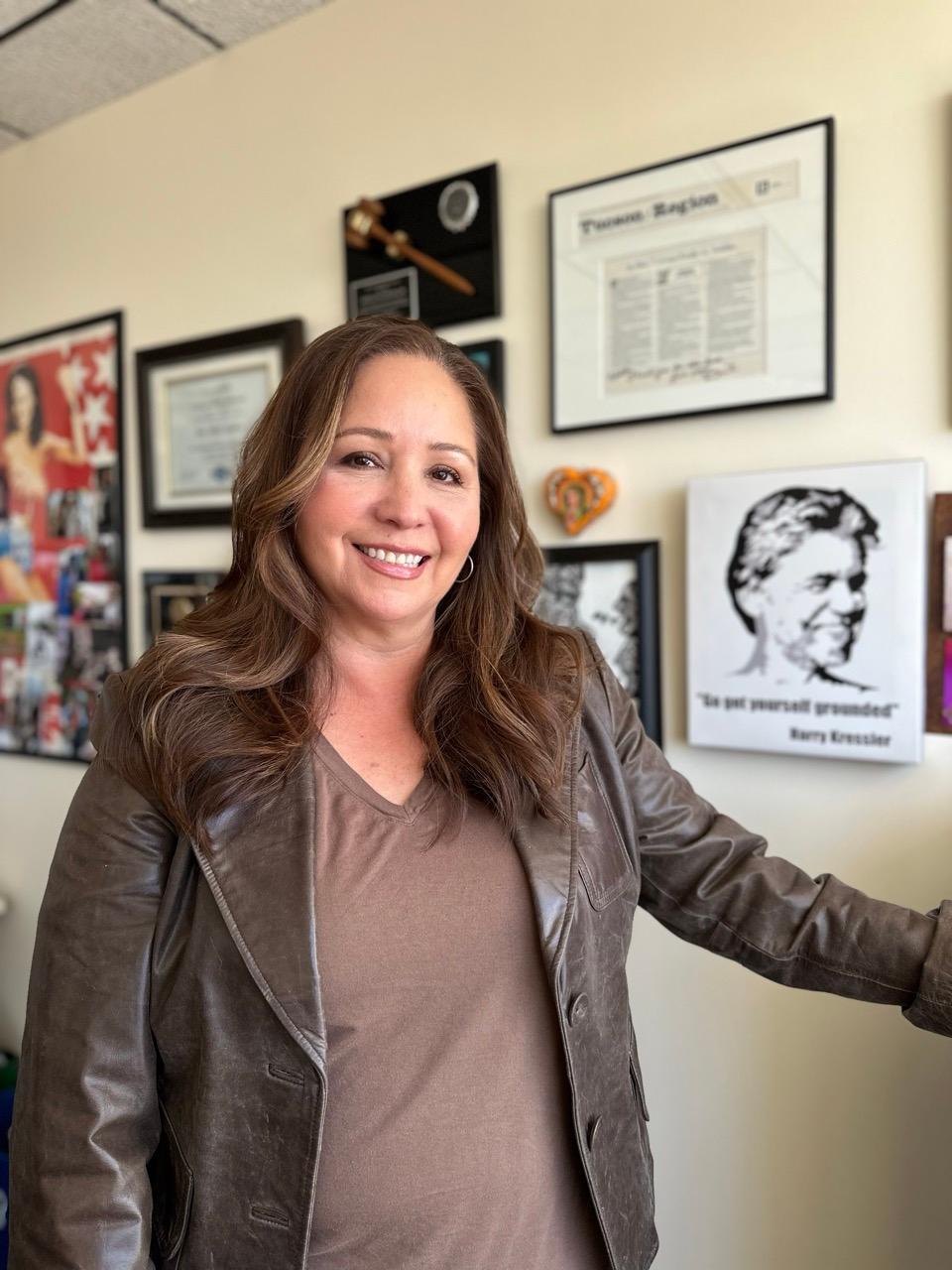
Adelita Grijalva
Organizations
Tucson Unified School District, Pima County Board of Supervisors
Location
Tucson, Arizona
Biography
A native Tucsonan, Adelita Grijalva attended public schools and eventually matriculated to and graduated from the University of Arizona. Raised in a politically involved family, as a young child, Grijalva accompanied her parents marching for farmworker causes and migrant rights. Upon graduating from U of A with a degree in Political Science, she began to work for Teen Court, a position that gave her insight into the way that school suspension policies negatively affected the life paths of working class, Latinx communities. Based on that experience, she ran for a position on the Tucson Unified School Board. She was the youngest woman ever to be elected. In 2020 she was elected Supervisor of the Pima County Board of Supervisors, and in 2023 Grijalva became the first Latina elected Chair of the Board.
Audio Clips
Interviewed by Jennifer Nájera on January 31, 2024 in Tucson, Arizona
Grijalva recalls growing up in an activist family, attending marches and attending political organizing meetings. She reflects on the work that the previous generation did to open opportunities for her generation.
Adelita Grijalva: I remember marches and stuff where I'm being pushed in a stroller and my mom. It's like super pregnant. Yeah.
Jennifer Nájera: And how old might have you been then?
Adelita Grijalva: I was one.
Jennifer Nájera: You were one?
Adelita Grijalva: Yeah, I was one.
Jennifer Nájera: So you've seen baby pictures or do you remember it?
Adelita Grijalva: I saw pictures, I remember having to be put in a really cold bath because we were out marching and I got like, heatstroke. Mhm. And my nana was so mad I was like.
Jennifer Nájera: So you have these kinds of memories?
Adelita Grijalva: Yeah I do, I remember it because it was like super cold. Yeah. So we were, it was yeah we were out, we marched a lot like I didn't know what a grape tasted like until I was an adult person because we were boycotting grapes. And I mean, there was just a lot of activity around my parents. They were involved with the Manzo Area Council. They just there were so many, um, hubs of things that were happening in our community, and I was too young to understand what they were all doing until later, but they were really pushing for equity, um, protests. We did a lot of sit ins. Yeah, yeah, yeah, there were a lot of stuff going on.
Jennifer Nájera: Well, we've learned so much about Tucson through the different people that we've interviewed. And, um, and also just I mean, I'm a Chicano studies professor, so I know a little bit about a lot of little different things, especially in the Southwest. But, um, but I'm wondering, you know, how you experience that as a child, you know, like, um, do they take you obviously they took you with you to this particular protest where you got, you know, heat stroke. But were you with them at the planning meetings, you know, how old were you?
Adelita Grijalva: We were little, and I remember I didn't. The only thing I remember is like, we're going to go hang out with Nina Lupe again, and that's Guadalupe Castillo. And so we're going to hang out. Oh, I know that woman, Raquel, that's Raquel Rubio Goldsmith. And, you know, I call her Chita, Isabel Garcia. Like, they're all friends, comadres, of my mom's. And so when they were doing all this planning, I didn't realize that I was a part of all of that, because I remember they were there was a story that Margo Cowan was talking about just at this Borderlands did this whole storytelling, and they had her come and sort of tell stories. And then she started laughing, and they're talking about Manzo and what happened there, and that some people were arrested and they had to run and try to get them out of jail, and they couldn't find the keys. And I'm standing like listening to her tell the story. And she said, well, you know where those went. And I was like, me? She's like, yeah, Adelita took the keys and was playing with them, and we couldn't find them, so we couldn't get to the van because Adelita lost the keys. And I was like I was four in my defense, I don't know what I did, but I thought that was funny. It's like, that's, um. Those were all these things that were happening that were really critical to the history of Mexican Americans and Chicanos in our community. And I was sort of, you know, this kind of annoying little kid that was like, can we go? Do we have to listen to more singing? I mean, like all these songs that I know, these chants of, like, marching, they're just in there. And it's so funny because I'll start marching. I'm like, I don't even remember that. I knew that, but I know all the words to, you know, different chants and stuff. It was it's kind of interesting now that I think about it. Um, but how influential all of those people were to giving all of us in my generation opportunities, they fought so hard so we didn't have to. And now I get really frustrated at my generation because we sort of dropped the ball, and now our kids are having to fight it. So it's, you know, it's one of those things where it really frustrates me because we should have continued to keep our eye on it. I feel like as a as a collective group of people, we should have done more. But anyway. So yeah, so that was my us growing up. We just sort of had I was around all of these people that just were changing everything, changing everything, and making it possible for me to have.
Grijalva talks about how her work in Teen Court inspired her to run for a seat on the TUSD school board and discusses her first campaign.
Adelita Grijalva: Um, and when I graduated, I applied for this job called Teen Court, where you work with young people, and I just loved it. Loved it. I was there 26 years. I know it's an anomaly now to have like one job for that long right out of college, but I did, and I loved it, and I loved working with young people. I loved working with families. And it was that job that I started asking, why are these kids continuing to get suspended for these really dumb things like, you know, you fought well, you knew they were going to fight. So did anyone do anything before then? And then at the time, the policy was, you just wait until they do something wrong and then you arrest them and then they're kicked out. We had the highest, um, out of school suspension rates in Tucson Unified, higher in school in my school at Pueblo High School and Cholla, the other neighboring South Side school, um, disproportionately the kids were of color. And then I started looking into what's going on at juvenile court, also disproportionately kids of color. And so I applied for this diversion program where we were going to work inside the schools. And that's when I started looking to see, like, what is it that these schools are doing? Most of the schools that we're willing to work with us were Tucson Unified. Um, and that's when I decided to run. I thought, you don't have anybody that is representing students. You have a lot of retired administrators. Everyone there was a senior citizen, um, or independently wealthy. Those were the two options because it's a volunteer position. So you didn't have people my age applying because it's volunteer. You have you need a job. Right? So, um, I talked to my then boss, uh, and he said, do it. Your job is flexible enough, Harry Kressler. And he was such an independent politically. My gosh, some of the things he'd say, I'm like, you can't say that. But he just gave me so much freedom to do what I needed to do whenever it whenever it came up. So I was, um, running for office and, uh, the first I had my little petition and I go up to this woman and she said, Georgia Bruso. She said, so I know your dad and I voted for your dad, and I helped your dad. But other than being your dad's daughter, what do you have going on other than being his daughter? What do you have? And I was like, welcome to campaigning. Okay. Let me get out my little stump speech in my head. Um, and I helped a lot of campaigns at that time. We were always helping somebody. So I was very comfortable, even young, going up to doors and knocking on doors and asking them to vote for different people. I didn't have a problem with that, but it was very different when it was you and your information and face was on everything. Um, and I wasn't. I wasn't married and didn't have children in the district, and, and the number one thing I heard is like, oh, and there was a, there was a sitting board member who put an email out and that was like, it was this email blast. And I'm like, I'm never going to recover from this. And she said, we don't we don't want the girl on the board at this time, and she's not married and she doesn't have children. So this is just a political ploy. She doesn't really care about our kids. That was my intro to her. Flash forward to when I won and I beat an incumbent. By the way, she, um, she, I'd like to have lunch and sat down and acted as if we were friends. Right. Just like talking. And I let her go. And I would really love your support. And I said, so you want this girl's support, right? Yeah. I know it was a good moment for me. I was like, no, I'm going to go with no. I said, I can't trust you. And until we reestablish trust, I'm not saying that you didn't know me. So I'm going to go with the premise that you were just wanting to support your friend who was the incumbent. But going forward, we have an opportunity to reestablish trust. But right now, we don't have it. So until we get there, I can't support you for any leadership. So well, don't you want to support a woman? I said, of course I do, but I also want to support someone I trust, and I can't trust you yet. But eventually we got there, so it was fine. But, um.
In this clip, Grijalva talks about being a Latina elected official and how her gender positionality and culture have affected her approach to leadership.
Jennifer Nájera: Um, so in both of these leadership positions, um, you know, you are you have been one of the one of the first or only women, um, Latina. And I'm wondering if you could talk a little bit about how or if that's affected. It's affected, um, how you've done your work or how people have received you. Um, you talked a little bit about that with the school board, but maybe you can talk about that in this position.
Adelita Grijalva: Yeah. I think that, um, it's interesting because I, I really have demanded that everyone around me treat everyone respectfully because I don't want to be seen as an office where other people don't want to work with us, because you realize when through TUSD that you have to work with these departments and they have to want to help you because they don't have to do anything, I'm not their boss. Um, and I made that real clear. Like, you know, there was one email exchange that I was sort of CC on at the back end, and I looked at the exchange and pulled aside my staff and said, we don't talk to people like this. We're not demanding anything. They have so much on their plate. We're respectful and you say please and thank you. And that's what my Nana taught me and my parents taught me. And that's how you treat people. Um, and so it was funny because I was coming, I can't remember when I was leaving. And I always say hi to all the custodial staff and most of them speak Spanish. And so, you know, when my daughter was getting ready at Fox for a mariachi, um, event, all the mariachis were coming out and they all stopped and were like, que bonitas or like, you know, they were all like, so excited. And I said, you guys play them something just like mananitas something. Oh my gosh, they all started crying. So now we're besties. But it was so funny because nobody else here knows their names. Like, I think that's so shameful. Like you, they take care of you. Like, why wouldn't you know who they are? Um, and I think that has been a different thing.
Jennifer Nájera: Humanizing. Yeah, it's important.
Adelita Grijalva: But it's important for them. And it makes me sad that they didn't have that before. Yeah, yeah, I know I get totally teary because it is it's so disrespectful. And I think that, you know, when, when I got here and I looked at what people were making, I'm like, that's not a livable wage like. So I pushed for class and comp because it's not livable. And what was interesting is um Jan Lesher, she's our county administrator. I was I had to go to an event because my colleague wasn't going to go. And I'm like, the county's name is on everything. How are we not going to have a supervisor there? So I rearranged everything so I could go, and it ended up being a memorial, a dedication. But it's kind of a memorial for this man who created 90% of the trails in Pima County. Like, amazing, right? And I never met him. But when I got there, his wife ran up and hugged me. And I'm like, I didn't know who she was. Right. So then you. Oh, thanks for being here. I'm like, oh, absolutely. I don't know who you are, but you know. And so they all talked about him. And then I had to speak and I'd never met him, but my eyes got super teary because I was like, oh my gosh, you're going to cry because I spoke after the wife I was like, oh my gosh, this is the worst. I cannot, I can't do this.
Adelita Grijalva: So of course I go up there, my voice cracks and um, Jan sent me a letter because she worked with Janet Napolitano. And Janet said women are always seen as emotional, so I don't want anyone crying, I don't cry, nobody on my staff cries. I mean, it was like this directive, like, if you I mean.
Jennifer Nájera: From Janet?
Adelita Grijalva: From Janet Napolitano and Jan was her chief of staff. And she said, I cannot tell you how liberating it was to be able to see you just be human, because it's like so nice. And I'm like, stop, you're going to make me cry. But I think that it's okay to have to have a range of emotions and I remember being on the school board TUSD and this one too, where if I get mad, it's like, um, what's not anything to get emotional about? I was like, it kind of is because it's people, it's kids, it's important. And if I get mad about something or sad about something, I'm not going to alter how I feel.
Digital Archive
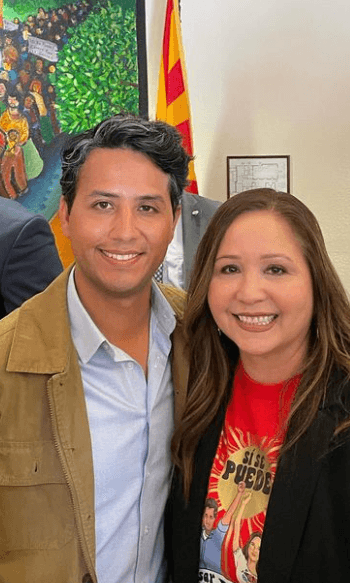
Grijalva pictured with X on Cesar Chavez Day in Pima County Day, year?
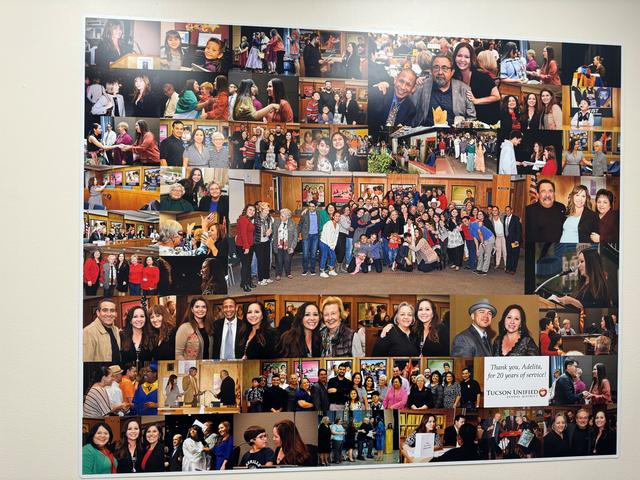
Collage reflecting Grijalva’s 20 years of service on the TUSD Governing Board
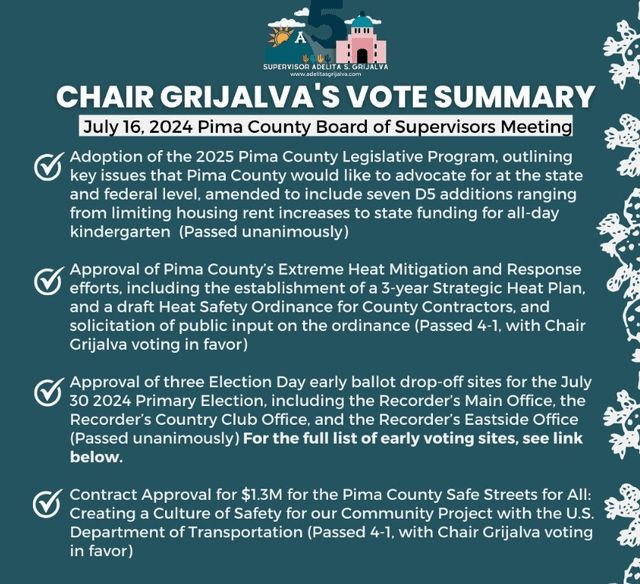
Heat Ordinance in Pima County.
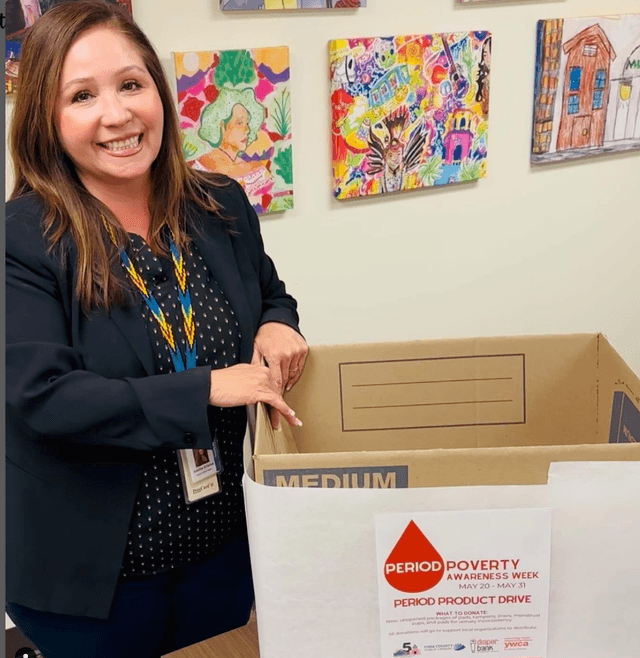
Grijalva pictured during the Period Poverty Awareness Drive for District 5.
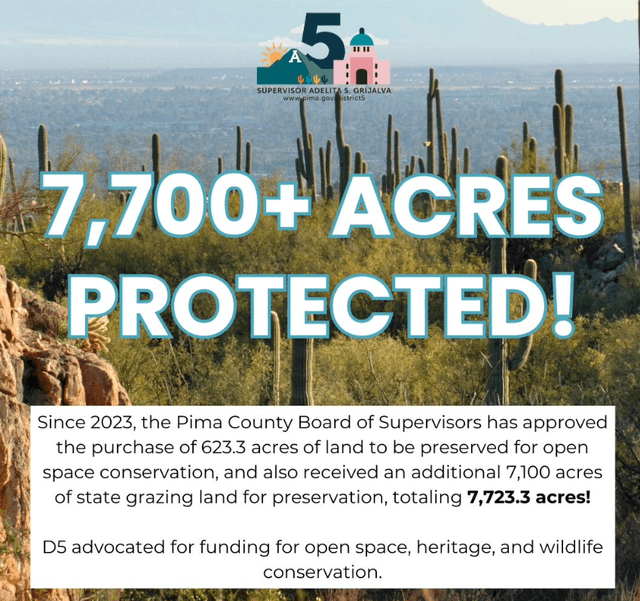
Social Media Graphic for preservation of Open Space in Pima County
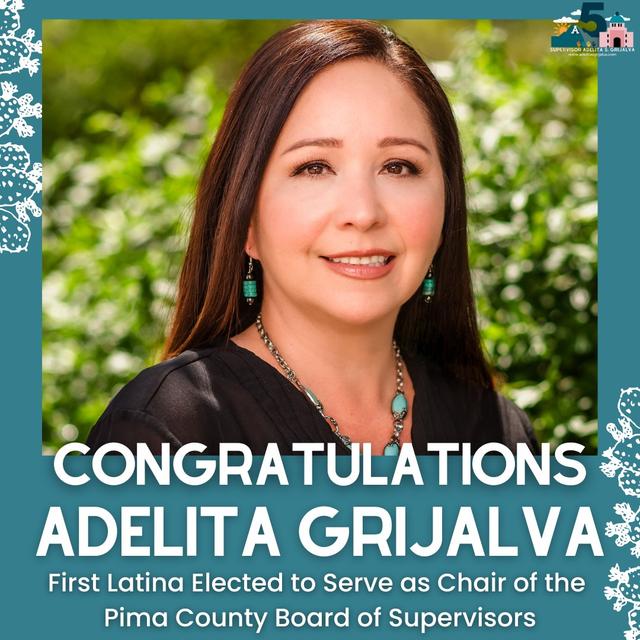
Social Media Announcement for Grijalva’s election as Chair of Board of Supervisors.